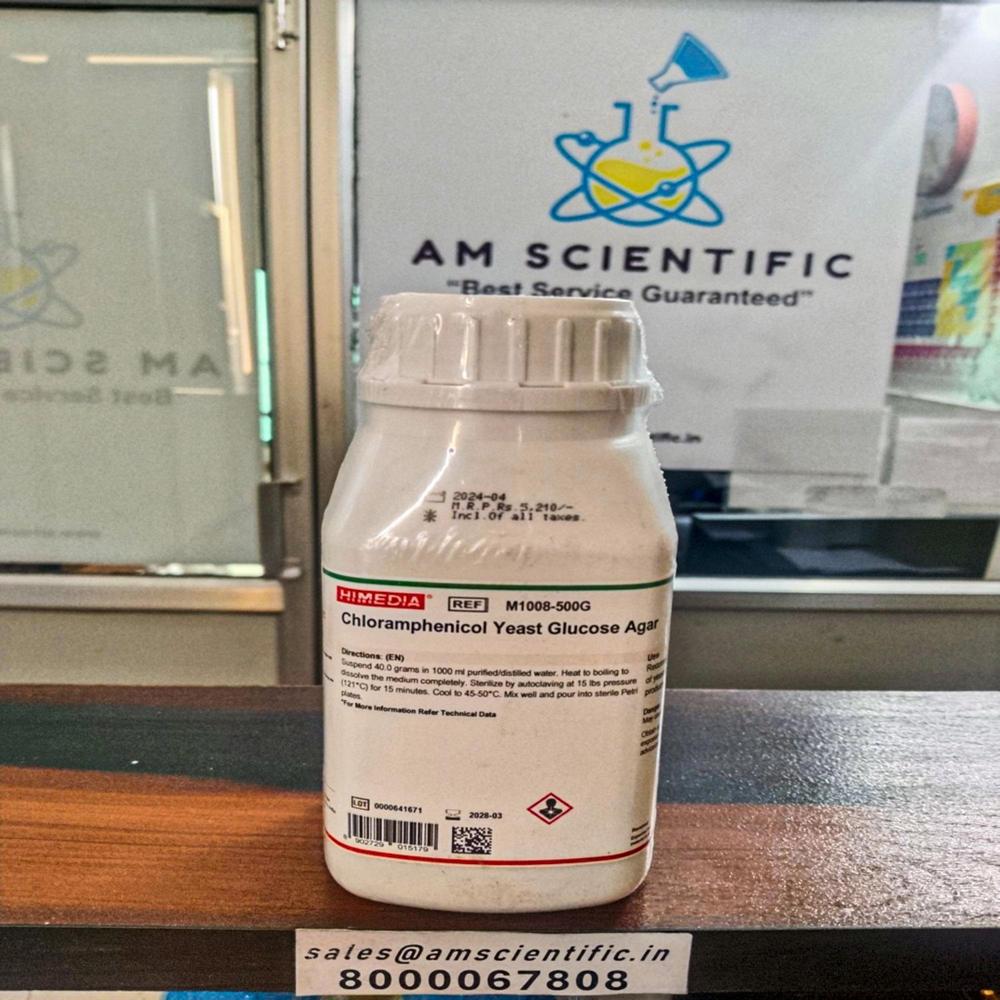
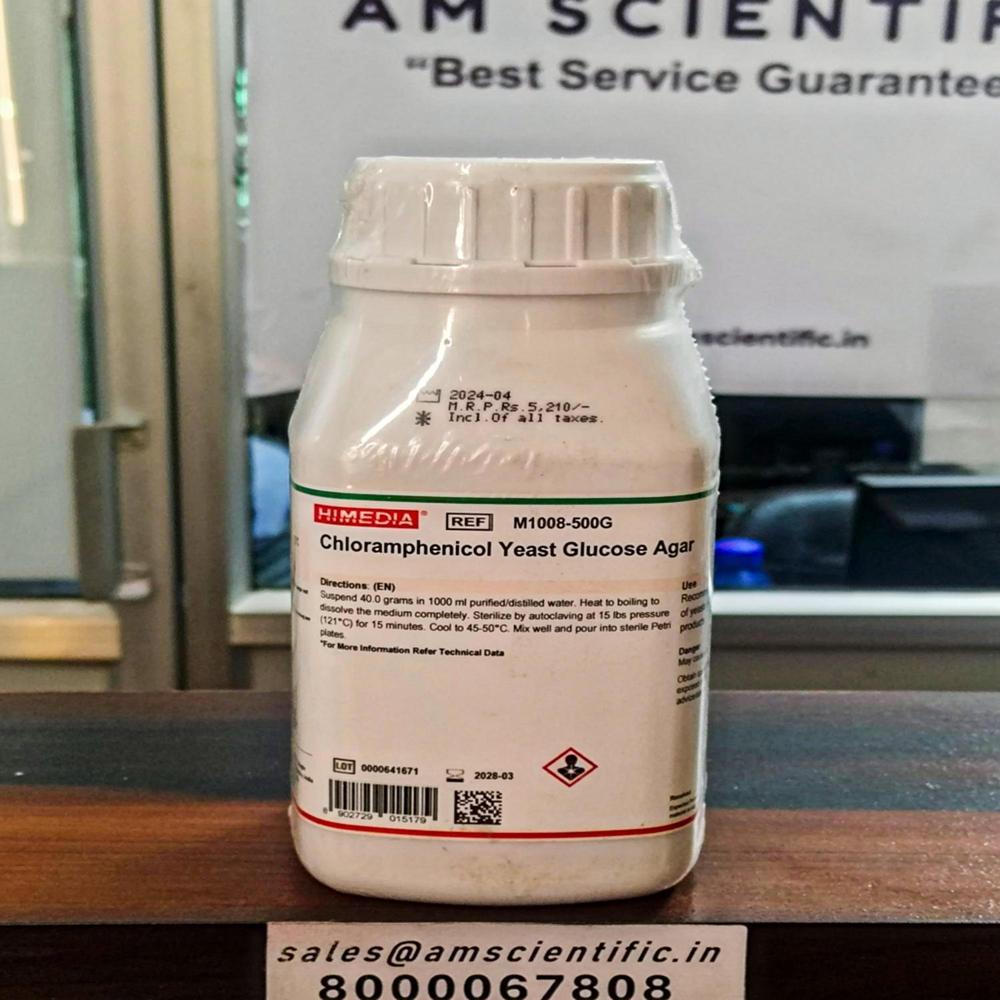
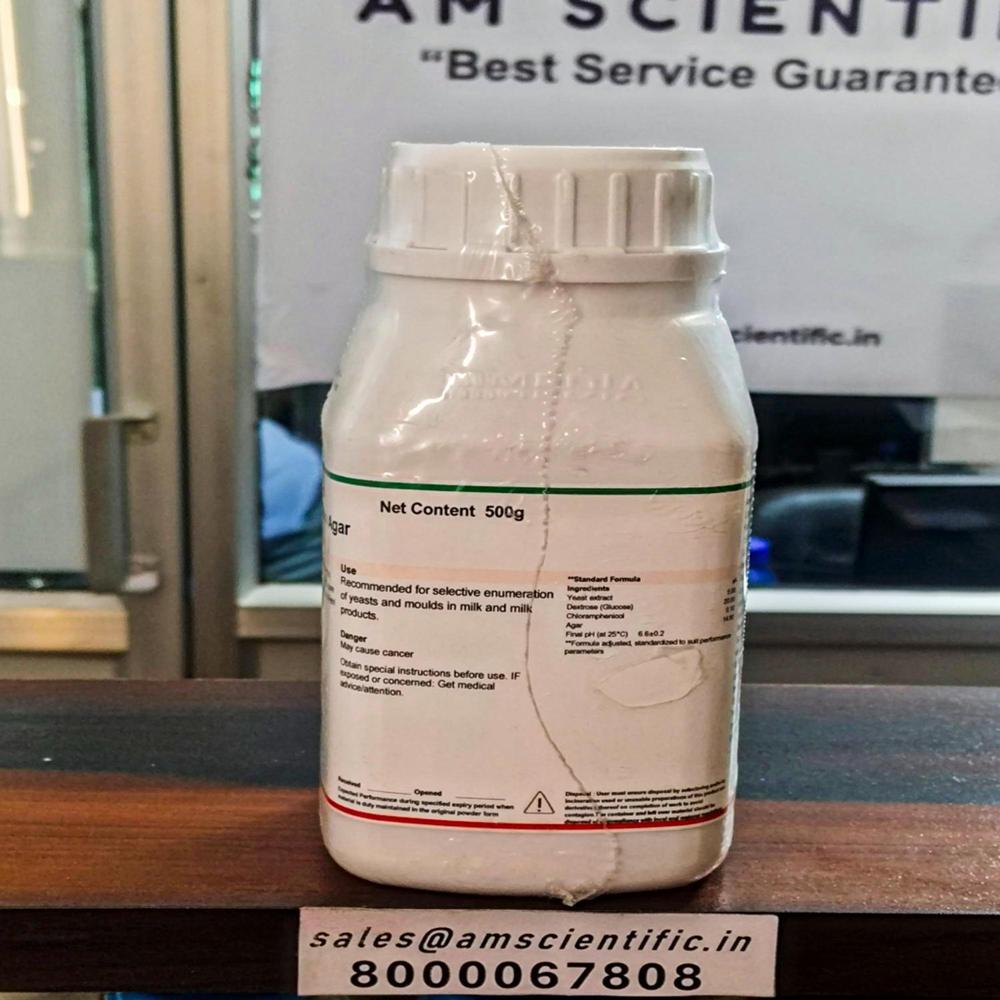
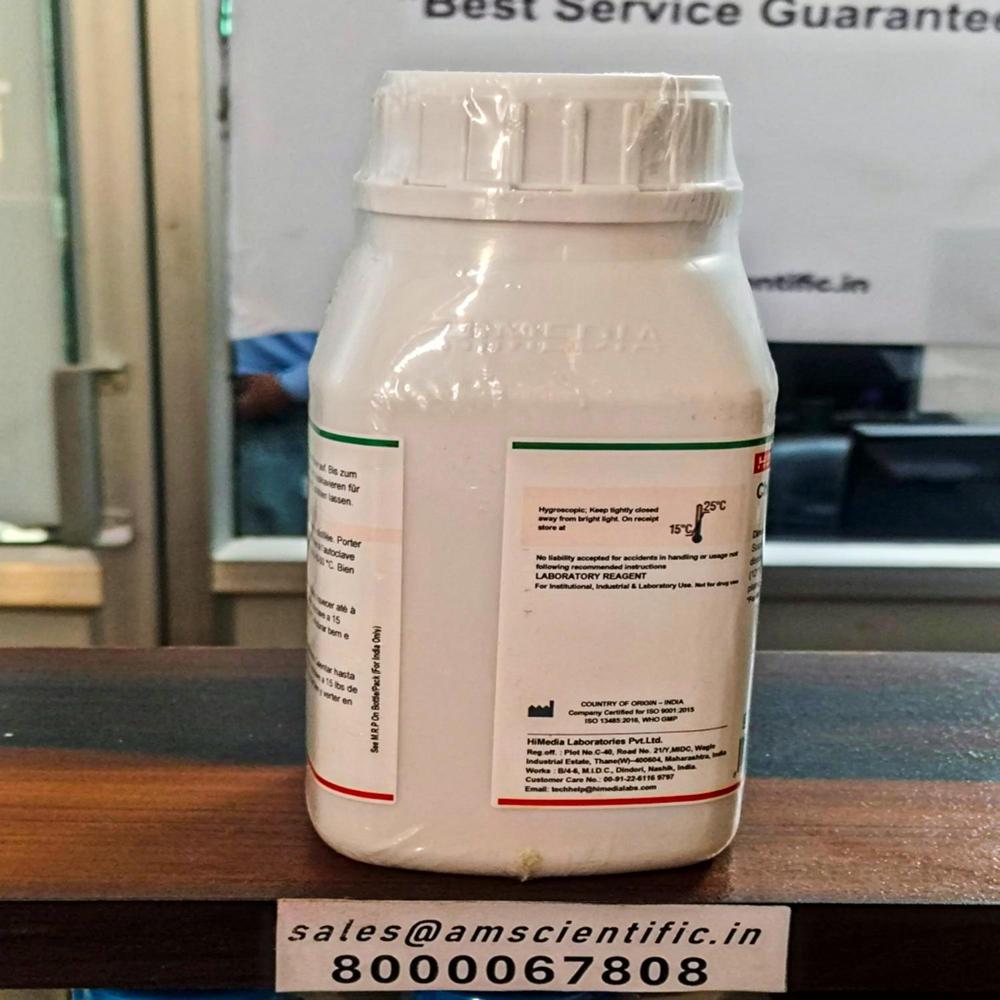
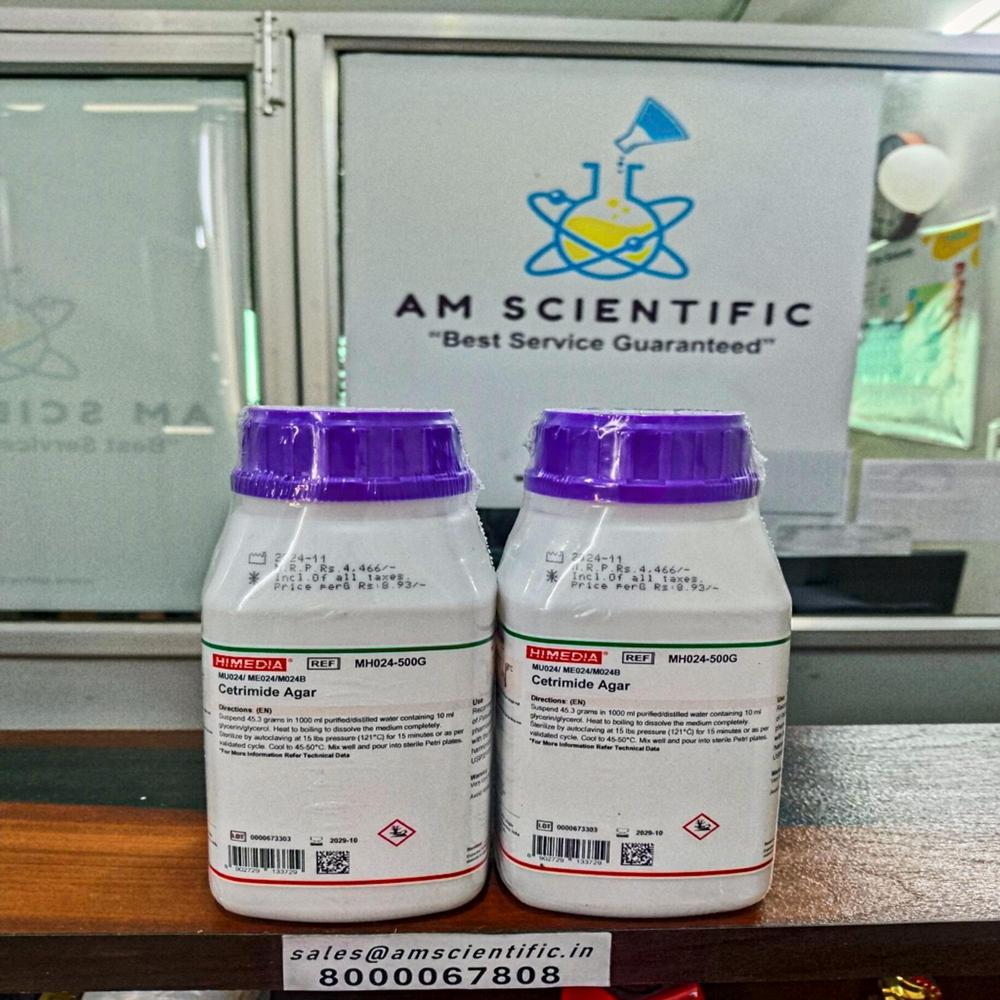
About Chloramphenicol Yeast Glucose Agar
Yeast Glucose Chloramphenicol Agar is a nutrient medium that inhibits the growth of organisms other than yeasts and moulds. Chloramphenicol inhibits bacterial growth. After incubation at 25C, colonies are counted and yeast colonies are distinguished from moulds by colony morphology.Effective Microbial IsolationChloramphenicol Yeast Glucose Agar is designed to support the selective growth of yeasts and moulds, making it highly effective for isolating these organisms from mixed cultures. The addition of chloramphenicol ensures that bacterial colonies are suppressed, providing a clearer environment for analyzing fungal samples. This makes it indispensable for routine microbial analysis in clinical, environmental, and food laboratories.
Convenient Laboratory UsageThis powder-form medium offers practicality for laboratory professionals. It is simple to prepare and suitable for a variety of laboratory protocols. Its storage requirement at room temperature enhances convenience and shelf-life. Laboratories can count on its reliability and consistent results in regular microbial monitoring and quality assurance processes.
FAQ's of Chloramphenicol Yeast Glucose Agar:
Q: How is Chloramphenicol Yeast Glucose Agar prepared and used in the laboratory?
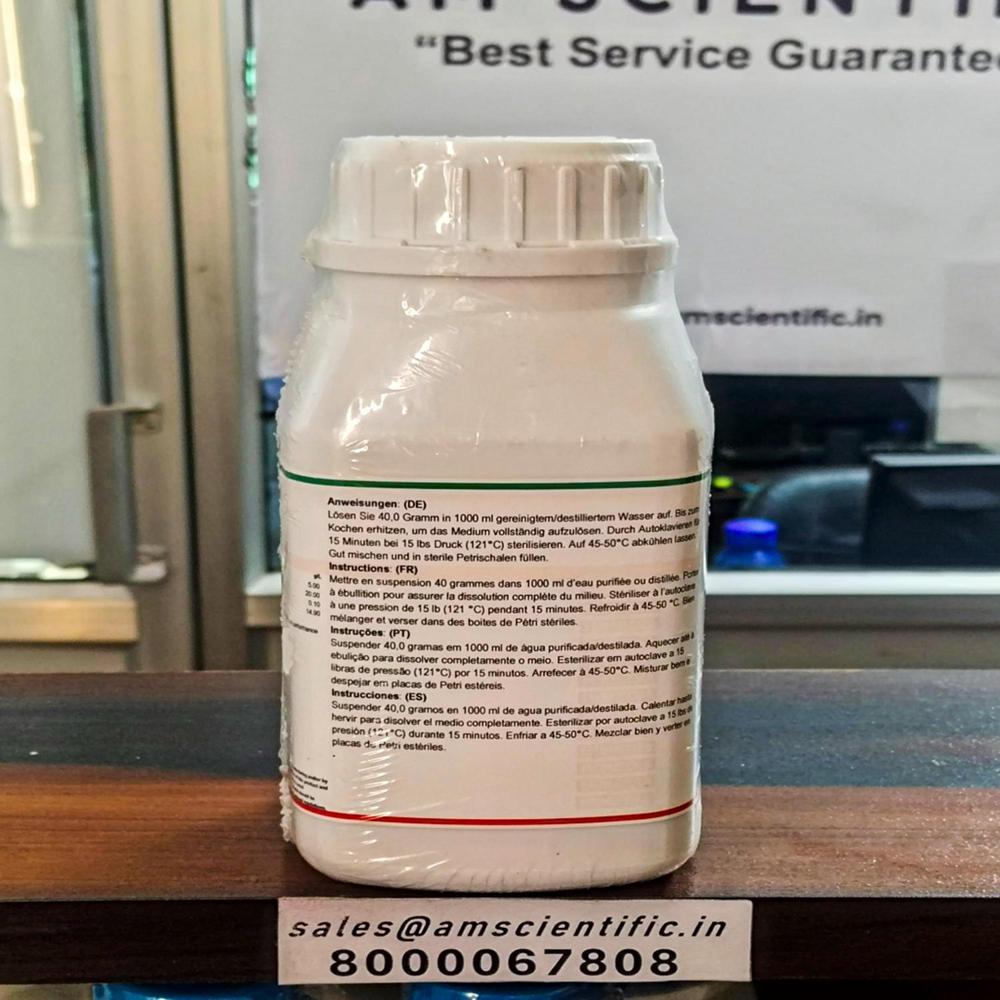
A: To prepare the medium, dissolve the specified amount of powder in distilled water, sterilize by autoclaving, and pour into Petri dishes. After solidification, samples are applied and incubated at 25C. Yeasts and moulds will develop, while bacterial growth is suppressed by chloramphenicol, allowing accurate colony observation and differentiation.
Q: What is the primary benefit of using Chloramphenicol Yeast Glucose Agar in microbial analysis?
A: The main benefit is its ability to selectively promote the growth of yeasts and moulds while inhibiting bacteria. This targeted environment simplifies isolation, enumeration, and identification processes for fungal organisms in mixed microbial samples.
Q: When should Yeast Glucose Chloramphenicol Agar be preferred over general nutrient agars?
A: This agar should be chosen when the objective is to study or enumerate yeasts and moulds without interference from bacterial growth. It is particularly useful in food, environmental, and clinical laboratories where mixed cultures are common.
Q: Where can Chloramphenicol Yeast Glucose Agar be sourced?
A: The product is available through various distributors, exporters, manufacturers, suppliers, and traders specializing in laboratory consumables. Reference CAS No: 56-75-7 and HS Code: 38210000 when sourcing internationally.
Q: What is the process for distinguishing between yeast and mould colonies on this medium?
A: After incubation at 25C, colonies are examined based on their morphology. Yeast colonies typically appear moist, round, and glistening, whereas mould colonies are often fuzzy and irregular, enabling clear differentiation.
Q: How should this agar medium be stored for optimal effectiveness?
A: The powder should be kept in a cool, dry place at room temperature. Proper sealing and protection from moisture ensure its stability and potency until used.








 Send Inquiry

 Send Inquiry
 Send SMS