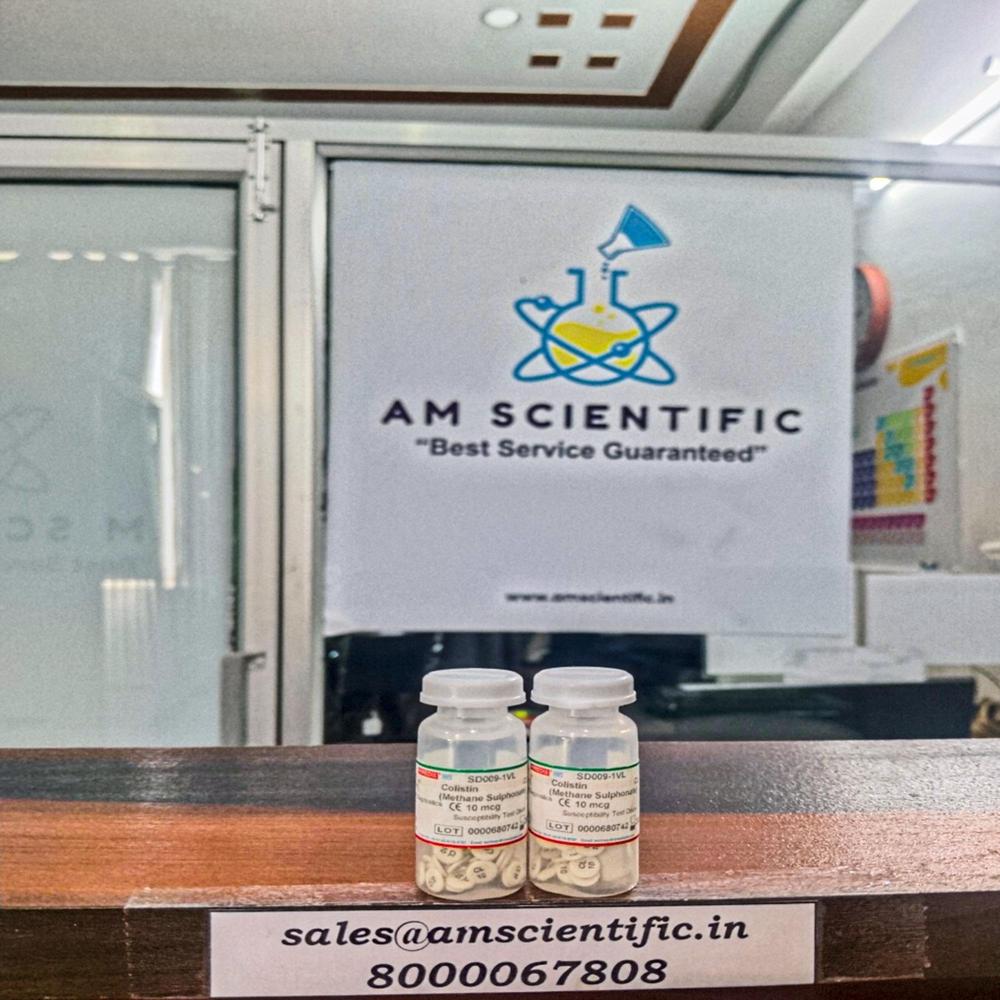
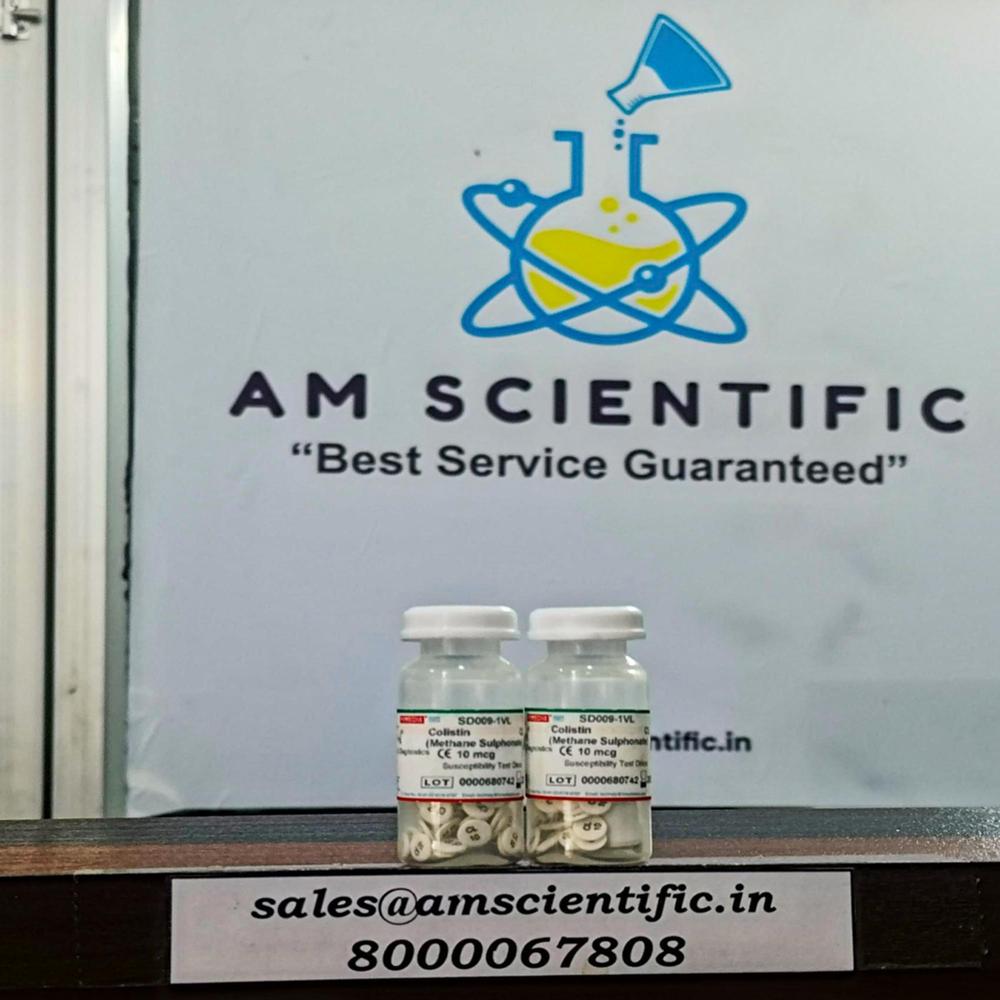
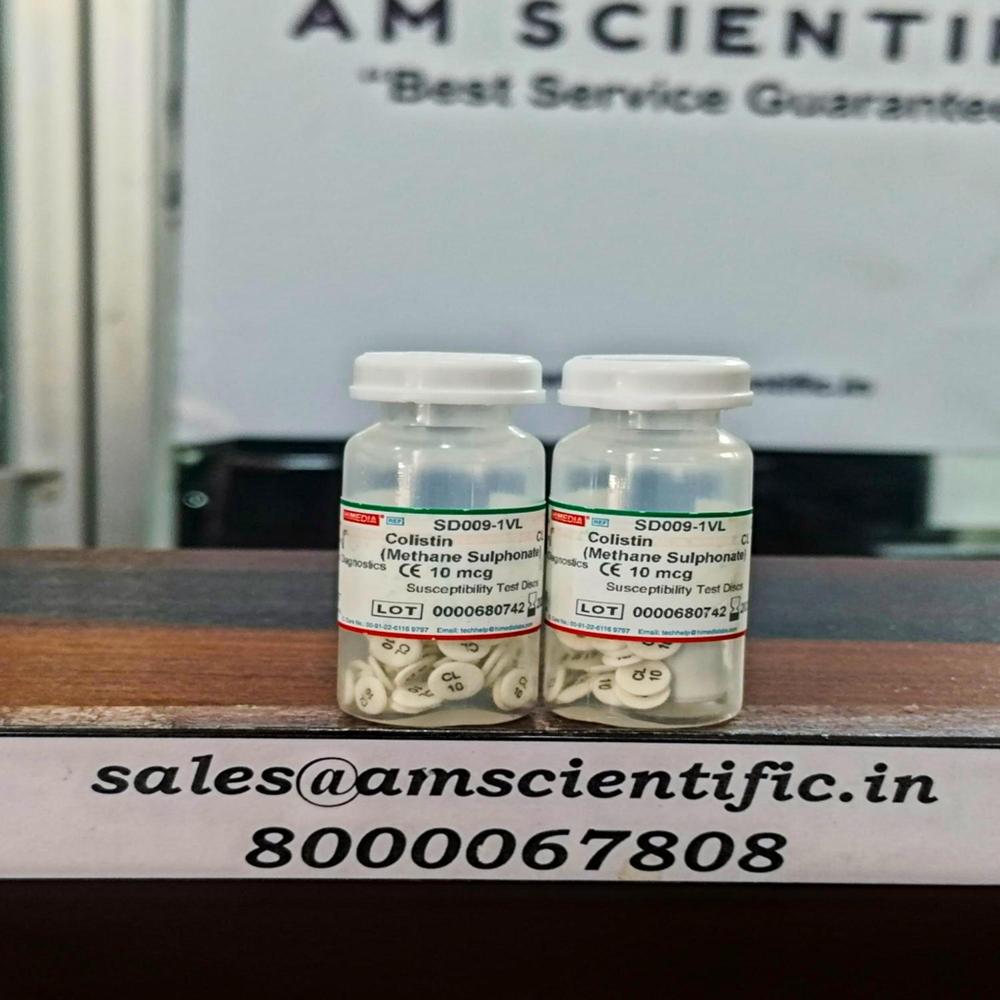
About Colistin (Methane Sulphonate) CL 10 mcg
Colistin (Methanesulfonate) CL 10 mcg is a filter paper disc containing 10 micrograms of colistin methanesulfonate, used for antimicrobial susceptibility testing.It helps determine the effectiveness of colistin against bacterial cultures, guiding antibiotic therapy.The disc is typically used in the Kirby-Bauer method.Description:
- Size:6 mm diameter
- Printing:"CL 10" printed on both sides
- Purpose:Used to determine antibiotic sensitivity of bacteria
- Mechanism:Colistin methanesulfonate disrupts the cell membrane of gram-negative bacteria, leading to bactericidal effects.
Intended Use:Antimicrobial Susceptibility Testing (AST) of bacterial cultures, Assessing bacterial sensitivity to colistin, and Guiding appropriate antibiotic treatment.Key Features:
- Colistin is a cationic lipopeptide antibiotic with a broad spectrum against gram-negative bacteria.
- Colistin methanesulfonate is a prodrug that, when hydrolyzed, releases active colistin.
- The CL 10 mcg disc allows for easy identification and standardized testing.
Reliable Identification and TestingThe CL 10 mcg disc ensures ease of use and uniformity in laboratory testing for gram-negative bacterial susceptibility. By utilizing a standardized concentration, labs can achieve accurate and reproducible results, enhancing both workflow efficiency and diagnostic precision.
Broad-Spectrum Gram-Negative ActivityColistin exhibits potent activity against a variety of gram-negative pathogens, making it a valuable asset in antimicrobial panels. Its cationic lipopeptide structure targets bacterial membranes, assisting in the management of multi-resistant organisms in research and clinical studies.
Proper Storage for StabilityTo maintain potency, the Colistin (Methane Sulphonate) disc must be stored in the freezer. This preserves the stability of the prodrug until it is hydrolyzed in laboratory procedures, ensuring reliable performance during susceptibility assays.
FAQ's of Colistin (Methane Sulphonate) CL 10 mcg:
Q: How should Colistin (Methane Sulphonate) CL 10 mcg discs be stored for optimal stability?
A: Colistin (Methane Sulphonate) CL 10 mcg discs should be kept in a freezer to ensure their stability and maintain the integrity of the antibiotic for reliable laboratory testing results.
Q: What is the primary use of the Colistin CL 10 mcg disc in the laboratory?
A: The Colistin CL 10 mcg disc is primarily used for standardized antimicrobial susceptibility testing of gram-negative bacteria, helping laboratories determine the effectiveness of colistin against pathogens.
Q: When is Colistin methanesulfonate converted to its active form?
A: Colistin methanesulfonate is a prodrug that is hydrolyzed and releases its active form, colistin, during laboratory processing, specifically in the presence of bacterial cultures.
Q: Where can Colistin (Methane Sulphonate) CL 10 mcg discs be sourced from?
A: These discs are available through authorized distributors, exporters, manufacturers, suppliers, and laboratory traders specialized in microbiological reagents and consumables.
Q: What is the benefit of using a standardized 10 mcg disc for testing?
A: Utilizing a standardized 10 mcg disc ensures consistent and comparable results across different laboratories, streamlining susceptibility testing protocols and supporting regulatory compliance.
Q: How does Colistin exert its antimicrobial effects on bacteria?
A: Colistin acts by disrupting the membranes of gram-negative bacteria, exploiting its cationic lipopeptide structure to compromise bacterial integrity and inhibit growth.








 Send Inquiry

 Send Inquiry
 Send SMS