About Amikacin AK 30 mcg
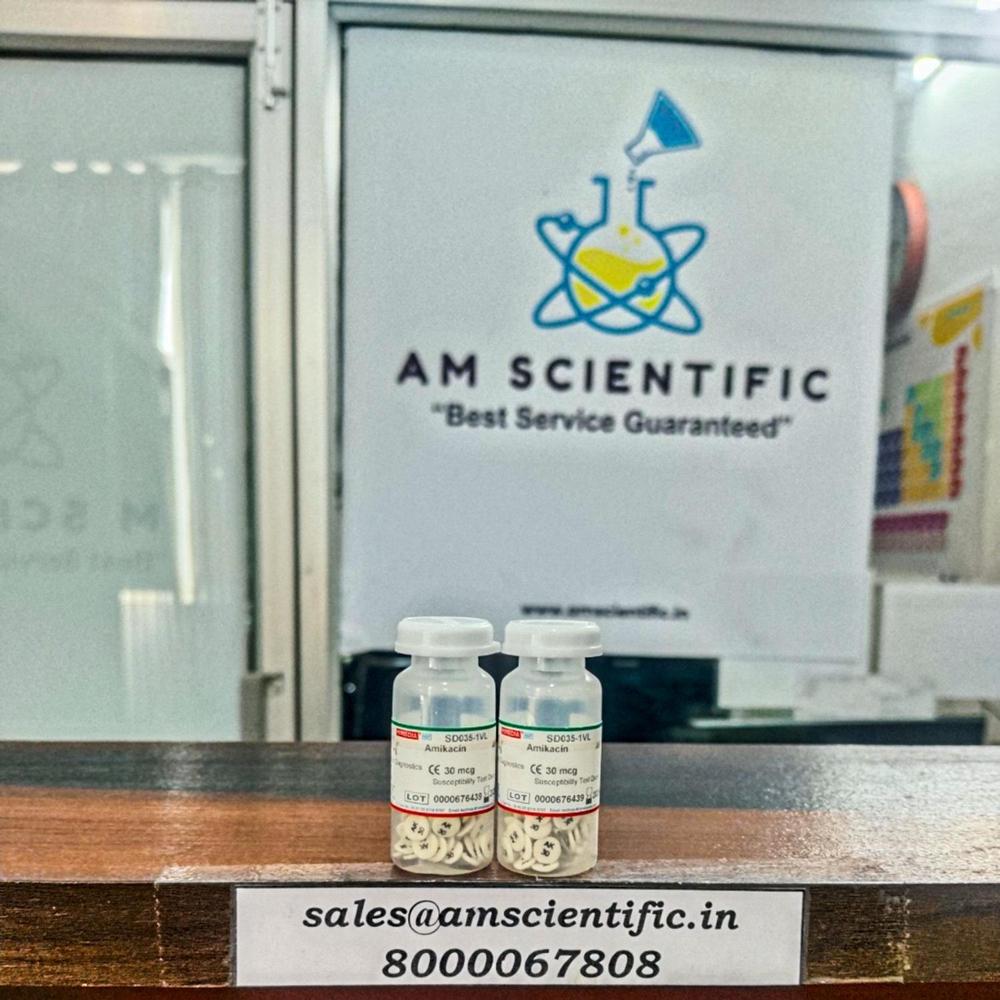
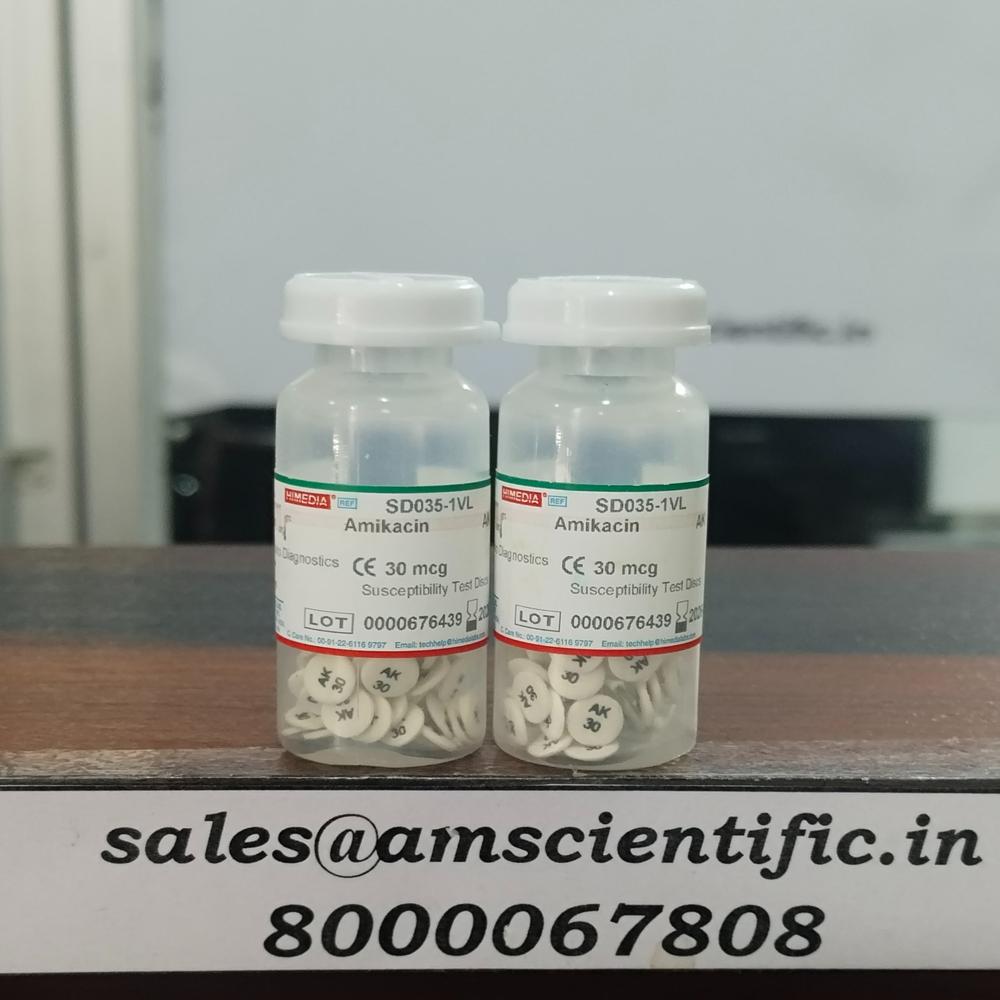
Amikacin AK 30 mcg discs aresmall, circular filter paper discs impregnated with 30 micrograms of the antibiotic amikacin.They are used in antimicrobial susceptibility testing to determine a bacteria's sensitivity to amikacin, aiding in the selection of appropriate antibiotic therapy.Key features:
- Purpose:Used for susceptibility testing of bacterial cultures, as per the Kirby-Bauer method.
- Content:Impregnated with 30 mcg of amikacin.
- Disc characteristics:6 mm diameter with "AK 30" printed on both sides for easy identification.
- Methodology:Placed on a bacterial culture on agar media, allowing amikacin to diffuse into the agar and inhibit bacterial growth.
- Interpretation:The size of the zone of inhibition around the disc indicates the bacteria's sensitivity to amikacin.
- Clinical use:Helps determine the effectiveness of amikacin against a specific microorganism, guiding antibiotic therapy.
Accurate Antibiotic Sensitivity TestingEnsure reliable results with Amikacin AK 30 mcg discs in routine clinical microbiology. Their precise dosage and sterile composition enable accurate assessment of bacterial susceptibility, an essential step for guiding effective treatment options. Regular use facilitates informed decisions in medical and research settings, enhancing patient care and laboratory outcomes.
Sterile and Microbiological Grade AssuranceEach Amikacin AK 30 mcg disc is prepared under stringent conditions to guarantee microbiological grade quality and sterility. They are crafted for optimal performance in research, offering consistent results while maintaining safety and integrity. The sterile nature of the discs prevents contamination, making them ideal for sensitive laboratory procedures.
FAQ's of Amikacin AK 30 mcg:
Q: How should Amikacin AK 30 mcg discs be stored for optimal shelf life?
A: To preserve their potency and sterility, Amikacin AK 30 mcg discs should be stored in a freezer. Proper storage conditions extend their shelf life up to 12 months, ensuring reliable test results.
Q: What is the typical laboratory process for using Amikacin AK 30 mcg discs in antibiotic sensitivity testing?
A: The discs are aseptically placed onto inoculated agar plates. After incubation, the zone of inhibition around each disc is measured to determine bacterial sensitivity or resistance to amikacin, informing effective antibiotic therapy choices.
Q: When is it appropriate to use Amikacin AK 30 mcg discs in a microbiology laboratory?
A: Amikacin AK 30 mcg discs should be used during routine or specialized antimicrobial susceptibility testing, especially when assessing the response of Gram-negative bacteria to antibiotics in clinical or research environments.
Q: Where can Amikacin AK 30 mcg discs be safely applied?
A: These discs are suitable for use in laboratories, including hospitals, clinics, research institutions, and quality control departments, wherever standard antibiotic sensitivity testing is required.
Q: What are the ingredients and physical characteristics of Amikacin AK 30 mcg discs?
A: Each disc is made from sterile filter paper and impregnated with 30 mcg of amikacin. They have a circular shape, are white in appearance, 6 mm in diameter, and are odorless, with 'AK 30' marking for easy identification.
Q: What is the benefit of distinguishing bacteria with Amikacin AK 30 mcg discs?
A: These discs facilitate the rapid identification of bacterial strains sensitive or resistant to amikacin. Timely and accurate results support tailored antibiotic therapies, improving patient outcomes and antimicrobial stewardship.









 Send Inquiry

 Send Inquiry
 Send SMS