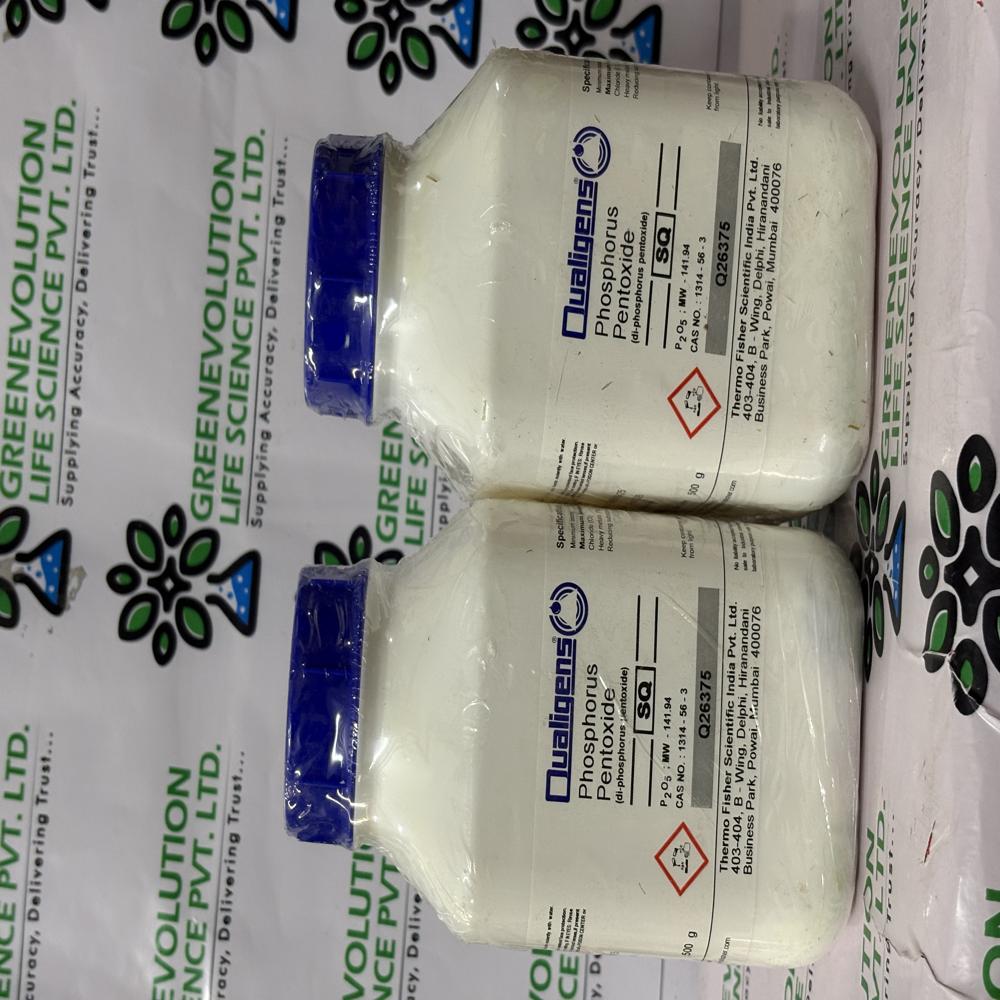
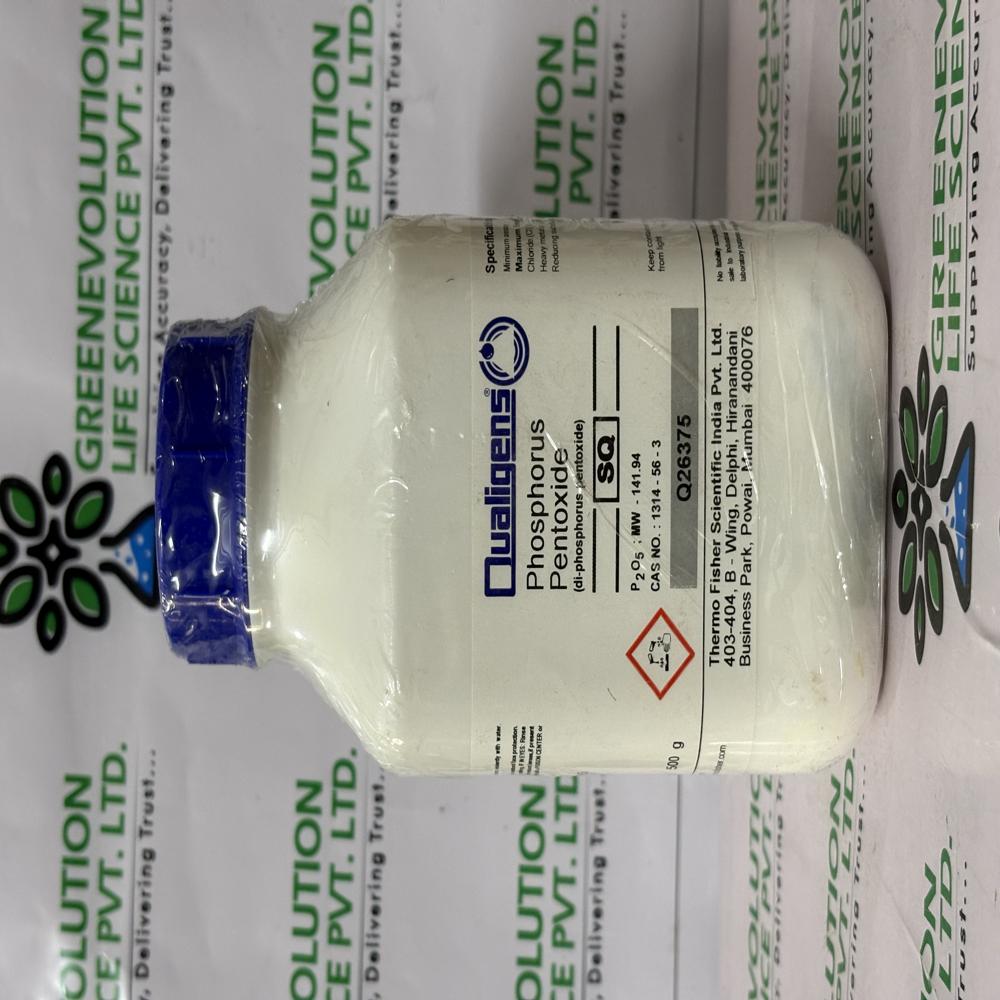
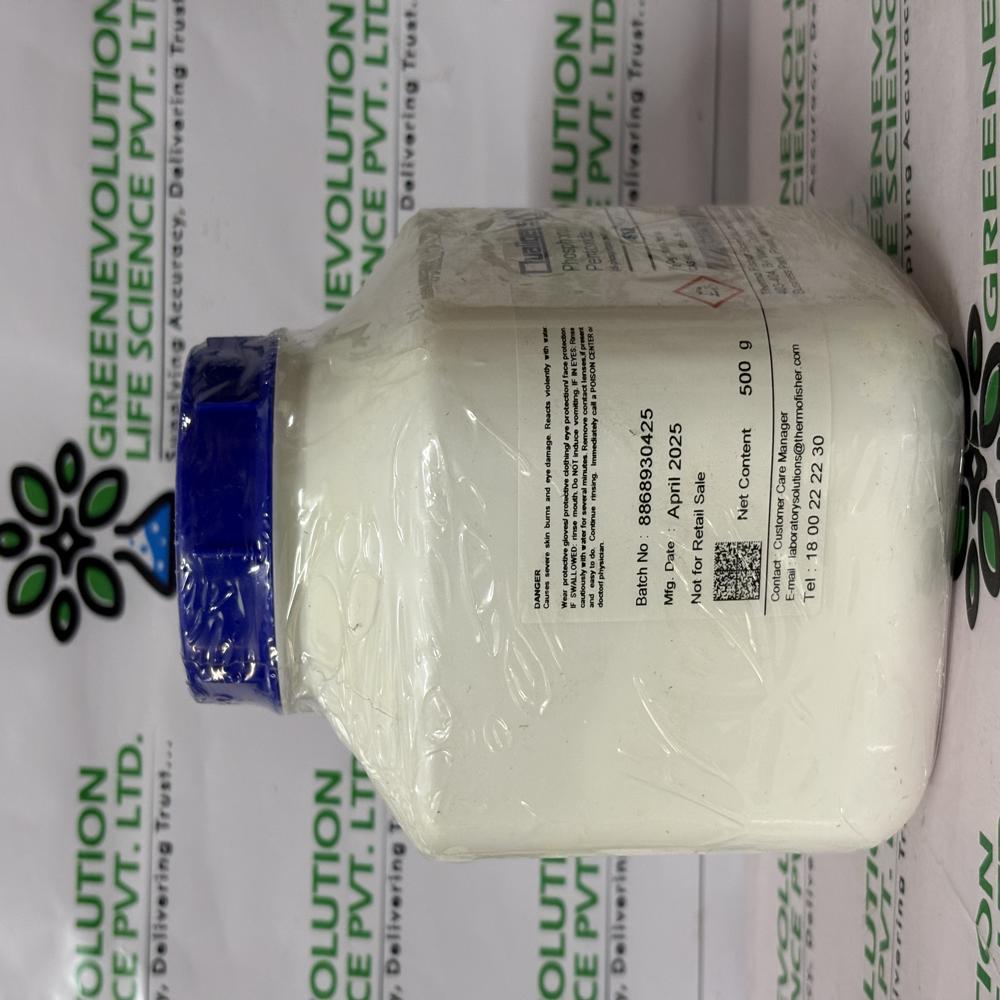
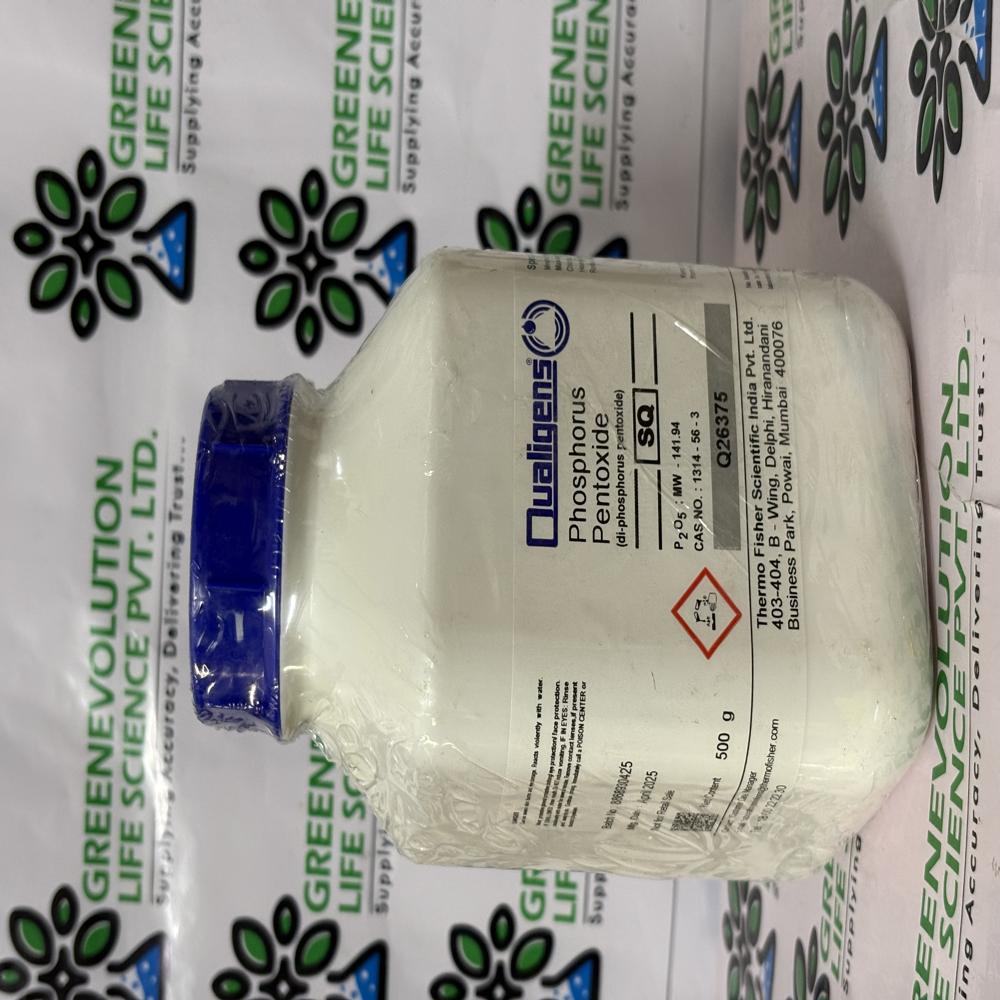
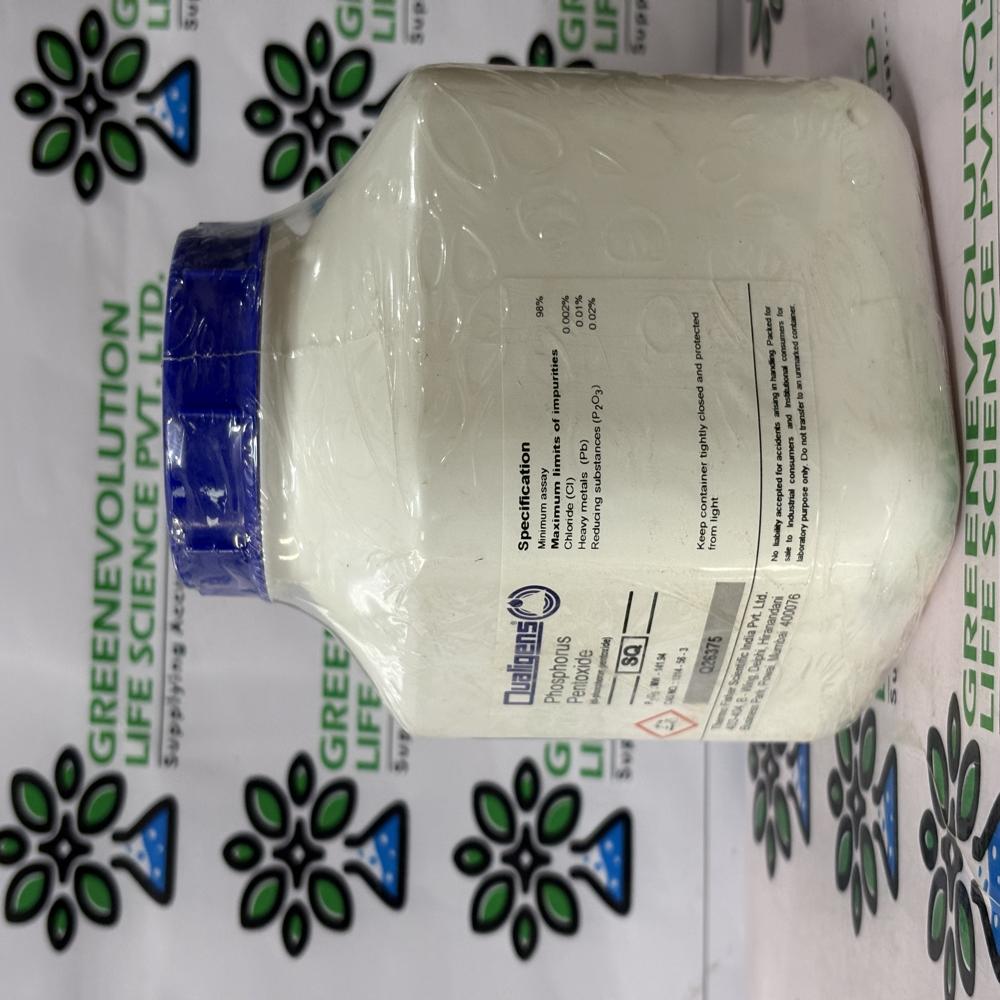
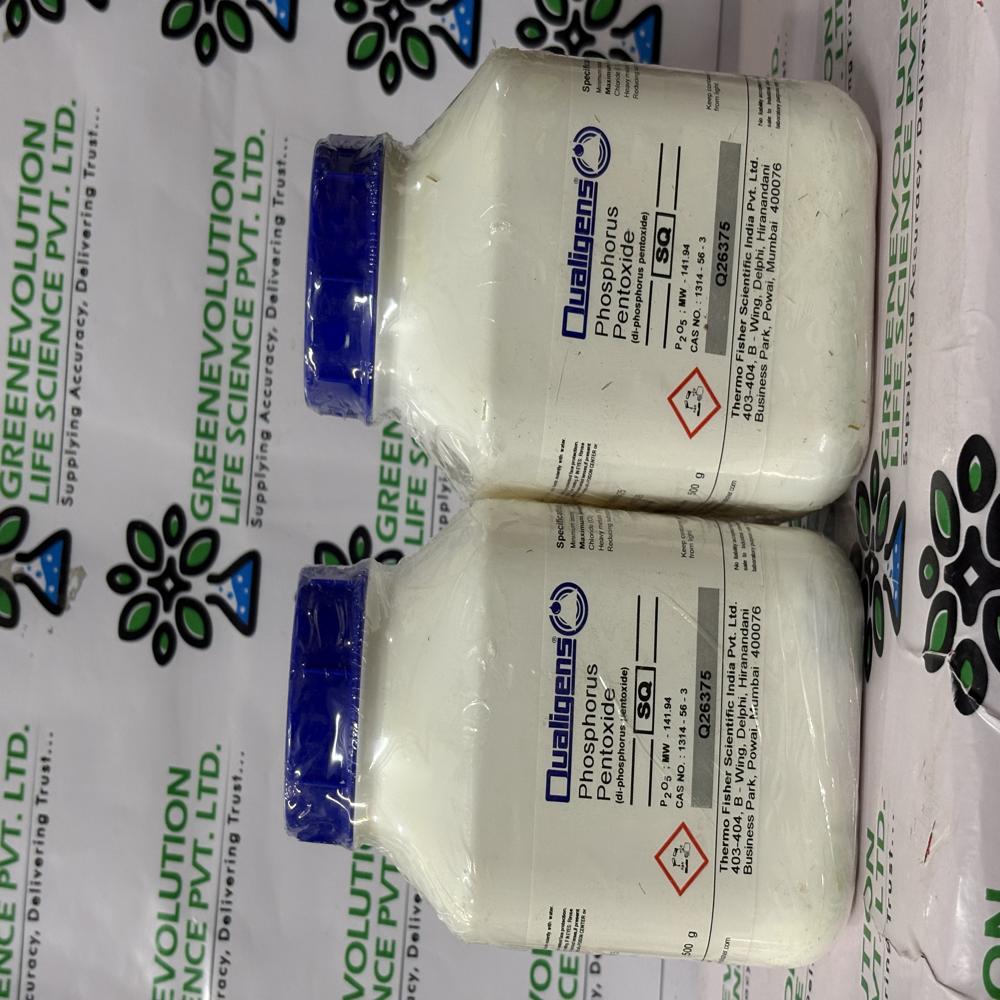
Phosphorous Pentoxide SQ 500g Specification
- Molecular Formula
- P O (empirical formula: P O )
- Shelf Life
- Refer to the manufacturer s label and expiry or retest date Months
- Molecular Weight
- 141.94 g/mol (empirical formula P O ); 283.89 g/mol (molecular formula P O ) Grams (g)
- Ph Level
- Not applicable to the dry solid; reacts with water to form acidic solutions
- Density
- Approximately 2.39 g/cm Gram per cubic centimeter(g/cm3)
- Flash Point
- Not applicable; inorganic, non-combustible solid
- Storage Instructions
- Store tightly sealed in a dry, moisture-free area. Protect from water and humidity.
- Packaging Type
- Sealed chemical container
- Boiling point
- Approximately 360 C; may sublime or decompose depending on conditions
- Melting Point
- Approximately 340 C
- Purity
- Product-specific; refer to the manufacturer s Certificate of Analysis
- Usage
- Laboratory drying and dehydration reactions
- Grade
- SQ grade; verify the product label
- Application
- Dehydrating agent, drying gases, chemical synthesis, and laboratory research
- Appearance
- White powder or solid
- Purity(%)
- Product-specific; refer to the manufacturer s Certificate of Analysis
Phosphorous Pentoxide SQ 500g Trade Information
- Minimum Order Quantity
- 1 Kilograms
About Phosphorous Pentoxide SQ 500g
Phosphorus Pentoxide is a highly reactive inorganic compound also known as phosphorus(V) oxide. Its molecular formula is commonly written as PO, although PO is often used as its empirical formula. It is a powerful dehydrating agent and is widely used in chemical laboratories for drying gases, removing moisture, and preparing certain phosphorus-containing compounds. It reacts vigorously with water to form phosphoric acid and releases considerable heat. The material is generally supplied as a white powder or solid and readily absorbs moisture from the surrounding air. Phosphorus pentoxide is used in chemical synthesis, analytical chemistry, and specialized industrial processes. Due to its strong moisture-absorbing properties and corrosive reaction with water, it must be handled carefully using suitable protective equipment and dry laboratory conditions. Avoid inhaling dust and prevent contact with skin and eyes. Store in a tightly sealed, moisture-resistant container in a dry place. Always follow the suppliers label and Safety Data Sheet for safe handling, storage, and disposal.






 Send Inquiry


 Send Inquiry

 Send Inquiry
 Send SMS