Andrade Peptone Water Specification
- Molecular Weight
- Not applicable mixture Grams (g)
- Usage
- Carbohydrate fermentation testing
- Boiling point
- Not specified
- CAS No
- Not applicable prepared culture medium
- Melting Point
- Not specified
- Flash Point
- Not specified
- Shelf Life
- As specified on the manufacturer's label/expiry date Hours
- Molecular Formula
- Not applicable mixture
- Density
- Not specified Gram per cubic centimeter(g/cm3)
- Purity
- Not expressed as chemical purity; standardized culture medium
- Packaging Type
- HDPE container
- Storage Instructions
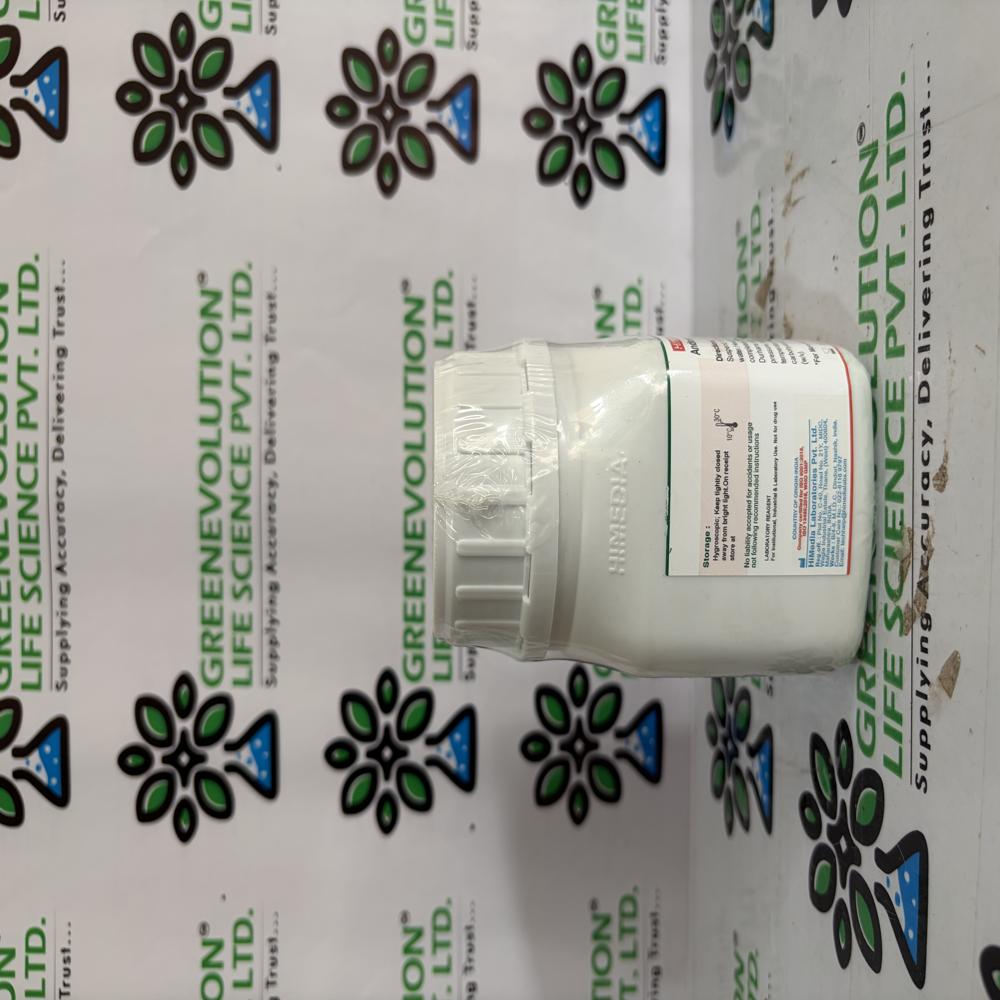
- 10 30 C, tightly closed and protected from moisture
- Application
- Microbiological culture and carbohydrate fermentation testing
- Appearance
- Cream to yellow coloured powder with pink tinge
- Purity(%)
- Not expressed as chemical purity; standardized culture medium
Andrade Peptone Water Trade Information
- Minimum Order Quantity
- 1 Kilograms
- FOB Port
- Mumbai Port, India
- Payment Terms
- Cash in Advance (CID)
- Supply Ability
- 1 Kilograms Per Day
- Sample Policy
- Contact us for information regarding our sample policy
- Main Export Market(s)
- Asia, Australia, Central America, North America, South America, Eastern Europe, Western Europe, Middle East, Africa
- Main Domestic Market
- All India
Andrade Peptone Water About
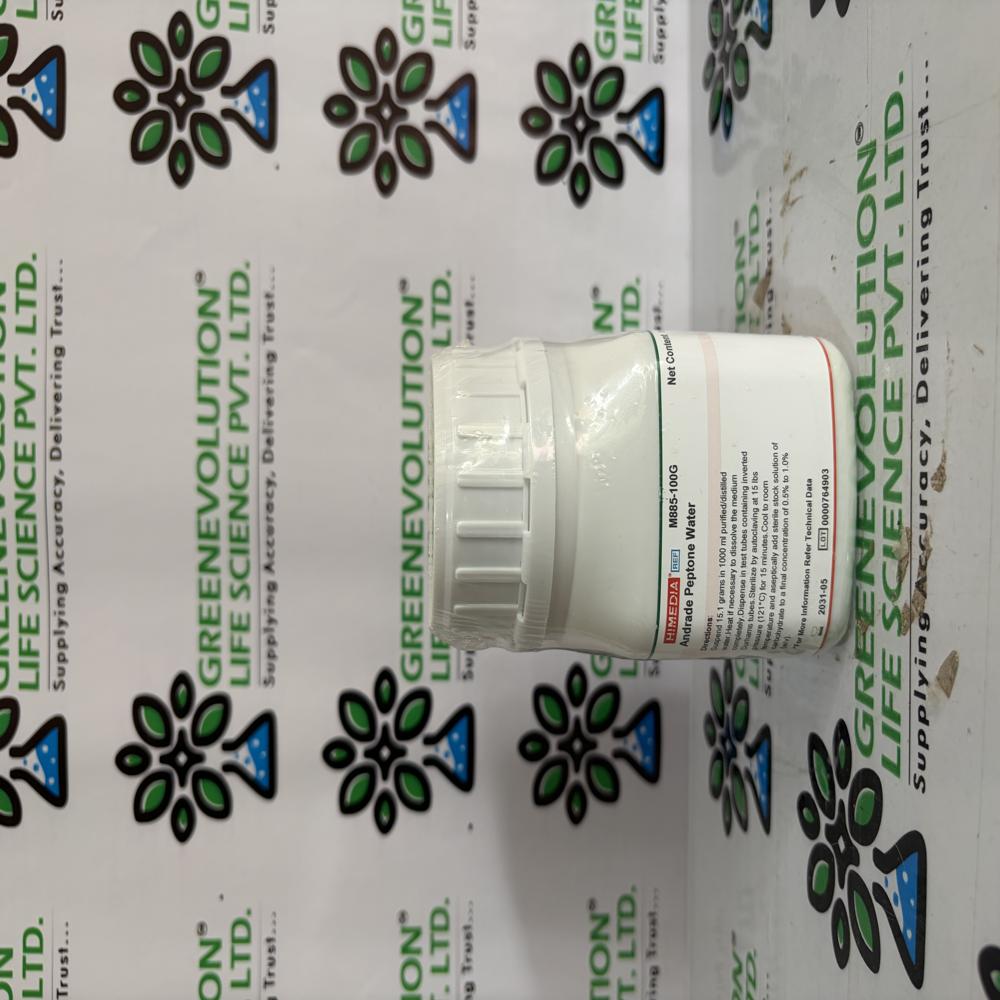
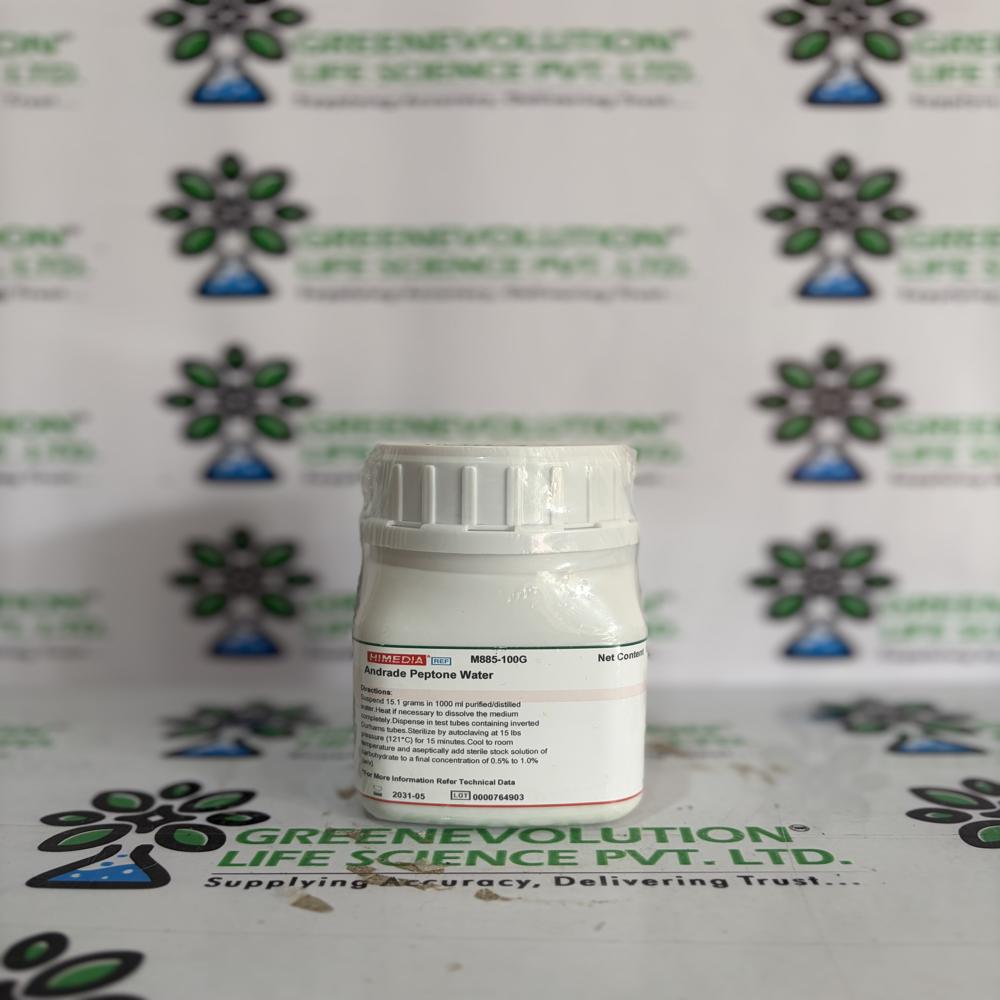
Andrade Peptone Water is a basal culture medium used to study carbohydrate fermentation reactions. Different carbohydrates can be added to the medium, after which bacterial fermentation can be detected through acid production and associated colour change of the Andrade indicator. Gas production may be detected using an inverted Durham tube. It is particularly useful for differentiation and identification of members of the Enterobacteriaceae groupAndrade Peptone Water is a basal culture medium used to study carbohydrate fermentation reactions. Different carbohydrates can be added to the medium, after which bacterial fermentation can be detected through acid production and associated colour change of the Andrade indicator. Gas production may be detected using an inverted Durham tube. It is particularly useful for differentiation and identification of members of the Enterobacteriaceae groupAndrade Peptone Water is a basal culture medium used to study carbohydrate fermentation reactions. Different carbohydrates can be added to the medium, after which bacterial fermentation can be detected through acid production and associated colour change of the Andrade indicator. Gas production may be detected using an inverted Durham tube. It is particularly useful for differentiation and identification of members of the Enterobacteriaceae groupAndrade Peptone Water is a basal culture medium used to study carbohydrate fermentation reactions. Different carbohydrates can be added to the medium, after which bacterial fermentation can be detected through acid production and associated colour change of the Andrade indicator. Gas production may be detected using an inverted Durham tube. It is particularly useful for differentiation and identification of members of the Enterobacteriaceae groupAndrade Peptone Water is a basal culture medium used to study carbohydrate fermentation reactions. Different carbohydrates can be added to the medium, after which bacterial fermentation can be detected through acid production and associated colour change of the Andrade indicator. Gas production may be detected using an inverted Durham tube. It is particularly useful for differentiation and identification of members of the Enterobacteriaceae groupAndrade Peptone Water is a basal culture medium used to study carbohydrate fermentation reactions. Different carbohydrates can be added to the medium, after which bacterial fermentation can be detected through acid production and associated colour change of the Andrade indicator. Gas production may be detected using an inverted Durham tube. It is particularly useful for differentiation and identification of members of the Enterobacteriaceae groupAndrade Peptone Water is a basal culture medium used to study carbohydrate fermentation reactions. Different carbohydrates can be added to the medium, after which bacterial fermentation can be detected through acid production and associated colour change of the Andrade indicator. Gas production may be detected using an inverted Durham tube. It is particularly useful for differentiation and identification of members of the Enterobacteriaceae groupAndrade Peptone Water is a basal culture medium used to study carbohydrate fermentation reactions. Different carbohydrates can be added to the medium, after which bacterial fermentation can be detected through acid production and associated colour change of the Andrade indicator. Gas production may be detected using an inverted Durham tube. It is particularly useful for differentiation and identification of members of the Enterobacteriaceae groupAndrade Peptone Water is a basal culture medium used to study carbohydrate fermentation reactions. Different carbohydrates can be added to the medium, after which bacterial fermentation can be detected through acid production and associated colour change of the Andrade indicator. Gas production may be detected using an inverted Durham tube. It is particularly useful for differentiation and identification of members of the Enterobacteriaceae groupAndrade Peptone Water is a basal culture medium used to study carbohydrate fermentation reactions. Different carbohydrates can be added to the medium, after which bacterial fermentation can be detected through acid production and associated colour change of the Andrade indicator. Gas production may be detected using an inverted Durham tube. It is particularly useful for differentiation and identification of members of the Enterobacteriaceae groupAndrade Peptone Water is a basal culture medium used to study carbohydrate fermentation reactions. Different carbohydrates can be added to the medium, after which bacterial fermentation can be detected through acid production and associated colour change of the Andrade indicator. Gas production may be detected using an inverted Durham tube. It is particularly useful for differentiation and identification of members of the Enterobacteriaceae group






 Send Inquiry


 Send Inquiry

 Send Inquiry
 Send SMS